
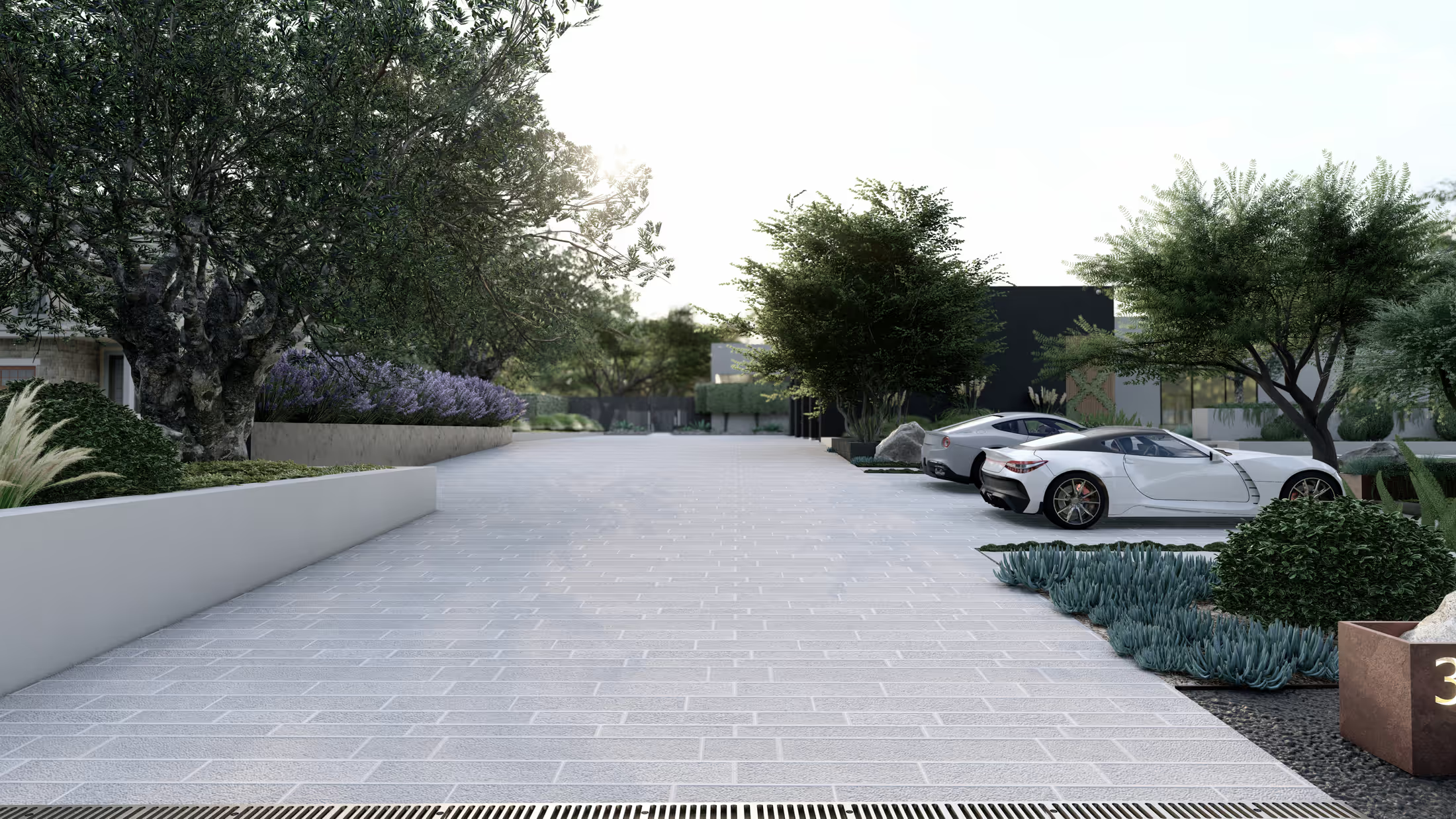
Landscape design in Arizona
A desert garden that glows after dark.
The low desert asks hard questions: summer highs well over 100°F, a few inches of rain that arrive as violent monsoon storms, and caliche layers that stop shovels. The reward is a palette and a light quality found nowhere else, warm stone, silver and blue-green planting, and sunsets that deserve a seat facing west.
Good Arizona design starts with shade and water, in that order. We place structures, trees and walls to make the hottest hours bearable, and we plan every drain, swale and scupper so a monsoon downpour goes where you meant it to.
What Arizona asks of a landscape.
01Shade is the first design move
A patio that is lovely in March is unusable in July unless the sun path is solved. We study the orientation, then use pergolas, shade sails, mature canopy trees and building walls so seating and the pool deck get relief exactly when you need it.
02Monsoon drainage
Summer storms can drop an inch of rain in minutes. We grade away from the foundation, draw dry creek beds and retention basins, and keep pads and paths from becoming channels. The plan shows flows, not just forms.
03Heat-smart surfaces
Dark paving and bare metal can run far hotter than the air. We favour lighter pavers, textured finishes and deep-set planting around pools, and we choose low-glare materials that do not bounce heat back at the house.
04Low-water, not no-garden
Many Valley cities restrict turf on new construction, and water costs keep rising. We design layered desert gardens, with trees for canopy, shrubs for body and accents for sculpture, that look lush in the right light and sip drip irrigation.
Recent work in Arizona.
Landscape design projects in Arizona, with other projects whose planting or layout would suit the same climate.


Plants that earn their place in Arizona.
A starting palette, not a prescription. The real list depends on your zone, soil, exposure and the look you want.
Palo verde
Parkinsonia spp.
Green-barked shade tree with brilliant yellow spring bloom.
Desert willow
Chilopsis linearis
Orchid-like summer flowers and a light, airy canopy.
Agave
Agave spp.
Architectural rosettes that anchor gravel beds and courtyards.
Red yucca
Hesperaloe parviflora
Coral flower spikes for months with almost no care.
Ocotillo
Fouquieria splendens
A sculptural silhouette that leafs out after rain.
Brittlebush
Encelia farinosa
Silver foliage and yellow daisies for a natural drift.
Deer grass
Muhlenbergia rigens
Soft movement and a quick restful texture beside hard stone.
Olive
Olea europaea
Evergreen, heat-tolerant, and good in courtyards when fruitless forms are used.
Built from what lasts here.
Pool barriers, setbacks and HOA architectural review are common in Arizona subdivisions. We draw to the details your builder and reviewer need; local approvals stay with your contractor or HOA.
Light concrete & porcelain pavers
Cooler underfoot, easy to keep clean, and a clean modern backdrop for planting.
Decomposed granite
A warm-toned, permeable surface for paths and gravel gardens.
Boulders & flagstone
Local stone ties the garden to its landscape and makes steps, walls and seats.
Steel, stucco and timber
Weather-hardy structure for pergolas, screens and walls, finished to match the house.
Designed remotely. Built locally.
01
Send what you have
Photos, a rough sketch or measurements. A survey or a drone video helps if you have one.
02
See the first concept
Within about a week, a first design direction and 3D visuals so you can react to something real.
03
Refine together
Revisions are part of the process until the layout, materials and planting feel right.
04
Build from the files
Final renderings and contractor-ready CAD plans for your builder to price and construct.
Landscape design in Arizona: your questions
Yes, and we usually design around them. Mature desert trees are expensive and slow to replace, so paths, beds and pool lines are laid out to protect root zones and use the shade they cast.
Yes: shaded lounge areas, lighter decking, sun shelves and spa placement that suits desert evenings. Your pool builder confirms structural and equipment specifics with the final plan.
Most Arizona HOAs welcome low-water landscapes, but each has its own palette and review process. The renderings are useful in submissions because reviewers can see what they are approving.
No. I work remotely, the way architects and builders have long shared plans. You send photos, measurements and goals, and we refine over calls and messages. Your local contractor handles on-site work and Arizona-specific permits.
Photorealistic 3D renderings of your space and contractor-ready CAD plans with dimensions, materials and quantities, in the formats your builder needs. Revisions are built into the process.
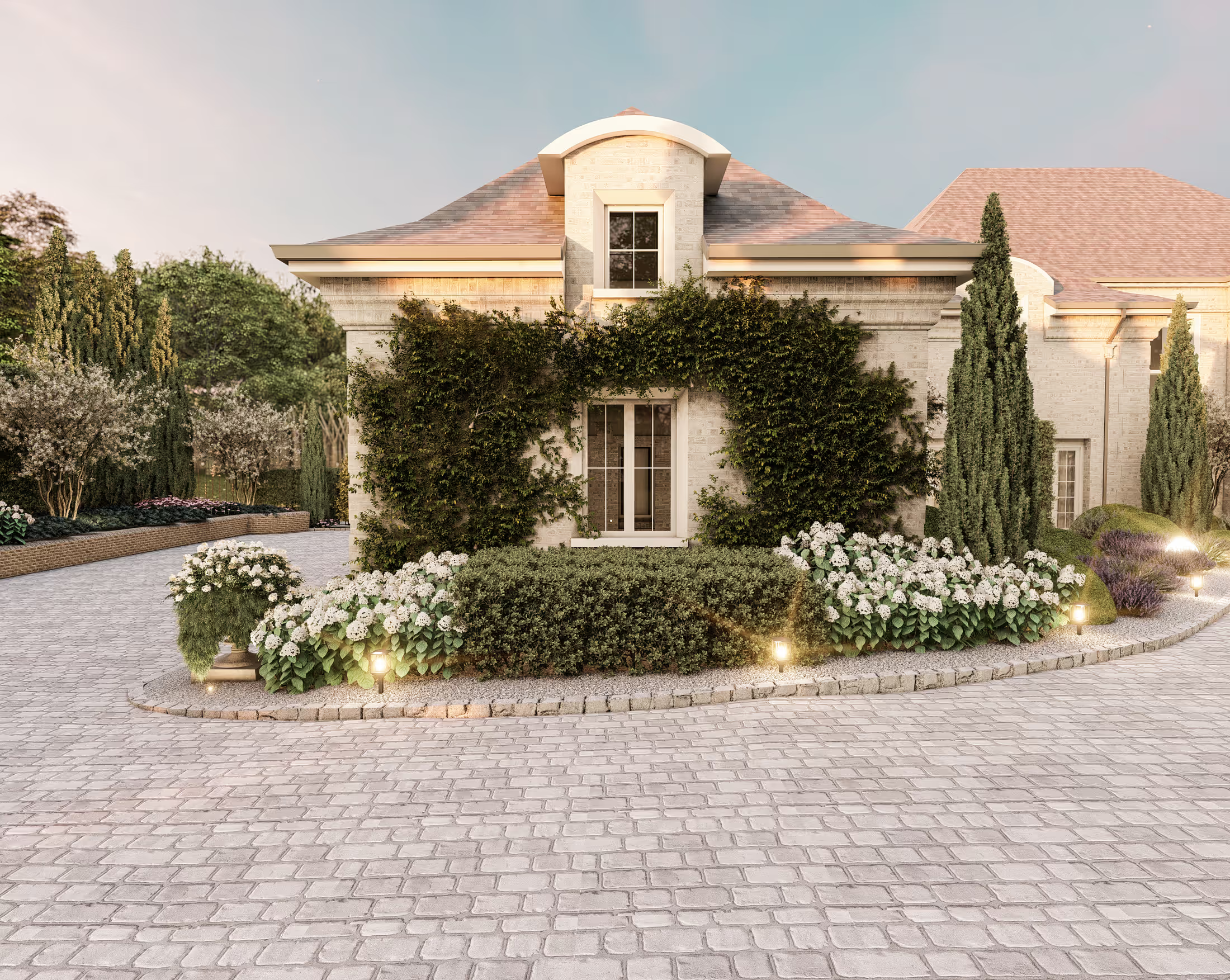
Planning a Arizona yard? Send me the space.
Photos, a rough sketch, a Pinterest board: whatever you have is enough to begin. Most projects go from first message to build-ready files in a few weeks.